
Oil Test Paper
Simple, reliable, cost effective strips for the determination of oil
This light blue paper turns dark blue in the presence of hydrocarbons, particularly gasoline, fuel oil, lubricating oil, etc. It is recommended for the rapid determination of oil contaminations in water and/or soil. To determine oil in water, move the paper back and forth a few times in the test solution. For detection of oil in soil, press the paper firmly against the soil to be tested and rinse it with clear water. With volatile hydrocarbons, the color reaction of the test paper has to be evaluated immediately.
For vehicles using diesel emission fluid, click here!
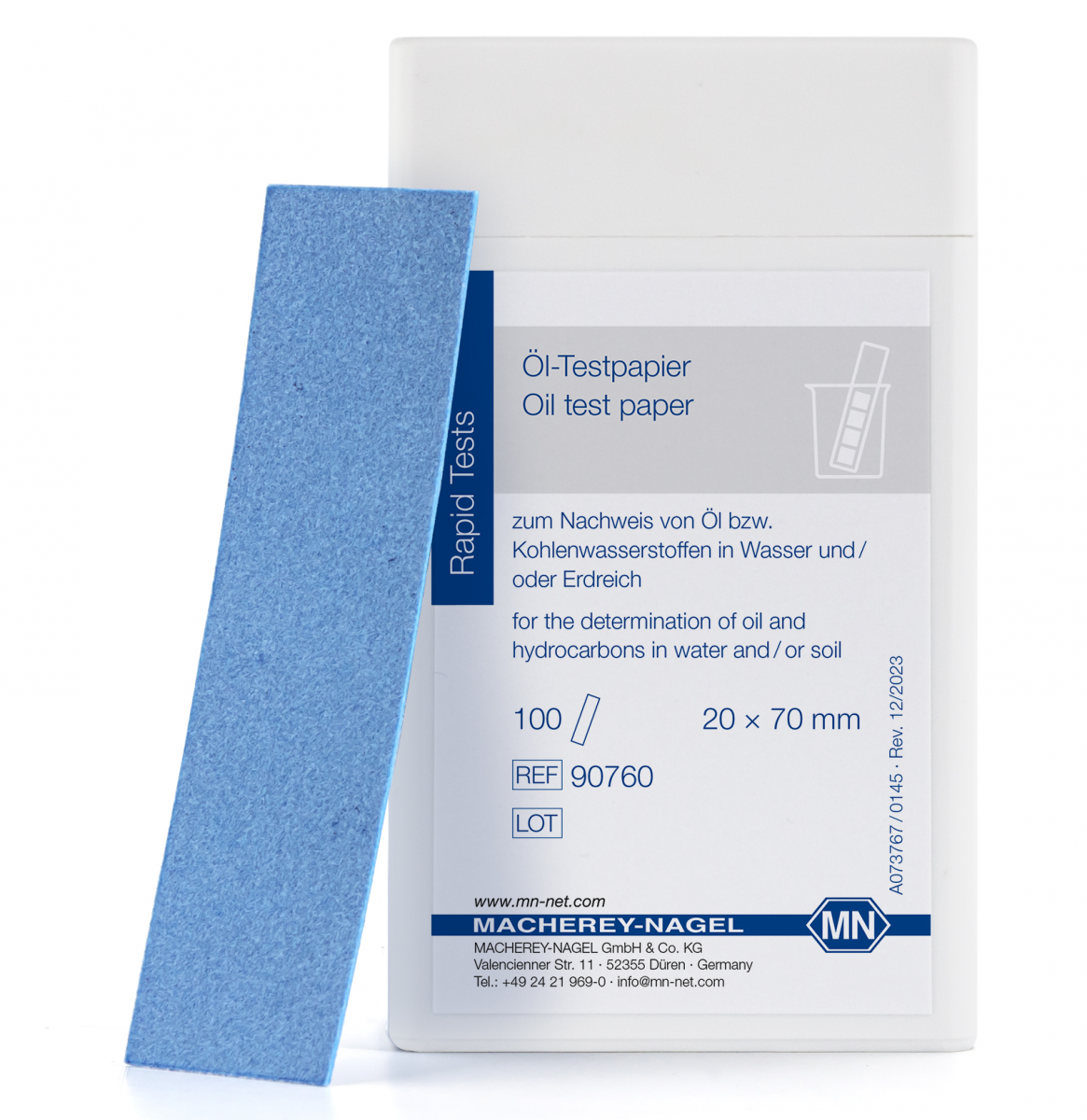
Oil Test Paper
REF: 90760 / OT-25
Oil test paper allows the rapid and reliable detection of oil contaminations of water and soil. The sensitivity largely depends on the nature of the respective hydrocarbon.
Key Features:
- Platform: Qualitative test paper
- Capacity: 100 test strips in a plastic box (REF 90760) or box of 25 strips (REF OT-25)
- Detection limit: 250 mg/L oil
- Color chage: Pale blue → dark blue
- Length: 70 mm
- Width: 20 mm
Why MN Oil Test Paper?
How it works
Determination of oil in water
Apply a drop of the water to be tested to the test paper or move the paper back and forth a few times in the test solution. In the presence of oil, blue discolorations appear. The intensity and size of the blue spots are indicative of the quantity of oil contained in the test solution. Water that is free of oil will neither moisten nor discolor the paper.
Determination of oil in soil
Press the paper against the soil to be tested and rinse thereafter with clear water. In the presence of oil dark blue spots appear against the light blue background. In the presence of larger quantities of oil, the latter will penetrate through the paper, rendering rinsing superfluous.
Evaluation of oil in water and soil
The sensitivity of the test paper is largely dependent upon the solubility of the hydrocarbons. By moving the test paper back and forth a few times at the surface of the liquid, the following values can be detected:
| Substance | Lower limit (mg/L of water) | Clearly detectable (mg/L of water) |
|---|---|---|
| Petroleum (B.P. 40-80°C) | 250 | 400 |
| Gasoline (high octane) | 10 | 25 |
| Heating oil | 5 | 10 |
| Lubricating oil | 1 | 5 |
Detection of fuel in Diesel emission fluid tanks
The Diesel emission fluid AdBlue is a 32.5% aqueous urea solution. Engines featuring the SCR catalytic technology use Diesel emission fluids to reduce the NOx-content in the flue gas stream. The reduction is necessary to reach the demanding limits for flue gases. The exact composition of AdBlue is defined in ISO 22241-1. Diesel emission fluids are filled into a separate tank. Fuel in this tank will permanently damage or destroy the SCR system, causing expensive damages.
Note: Fuel and Diesel emission fluids do not mix. Instead, fuel forms small droplets or a thin layer on the surface. To give a positive reaction, the test paper must come into contact with fuel in the tank.
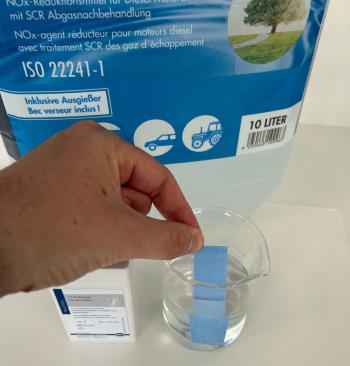
Move test paper back and forth 3-5 times across the surface of the suspected liquid. For soil, press the test paper against the surface.
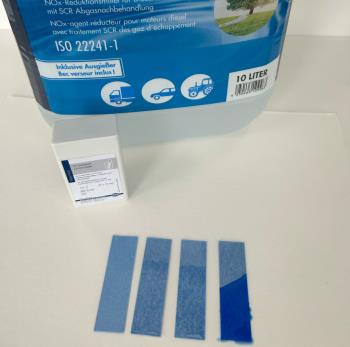
Remove the test paper. A dark coloration indicates the presence of fuel.
Different concentrations of fuel produce a color ranging from light to dark blue:
- a) pure AdBlue
- b) 50 mg/L fuel in AdBlue
- c) 100 mg/L fuel in AdBlue
- d) pure fuel
Literature